
Computer vision traffic monitoring for a city network
A system that reads camera feeds and IoT sensor data to count and classify vehicles, spot congestion and give traffic teams live analytics, with 95% detection accuracy.
- Industry
- Infrastructure and smart city
- Services
- Computer vision models, IoT integration, analytics dashboard
- Stack
- TensorFlow, OpenCV, Python, React, AWS
- Timeline
- 3 months
The problem
The city monitored traffic largely by hand, and that could not keep up with growing vehicle volumes and more complex traffic patterns. Existing cameras recorded footage but did nothing to analyse it.
Weather, changing light and the need for real-time processing made automated detection hard. The infrastructure in place could not watch many locations at once or turn what it saw into information traffic teams could act on.
How we approached it
We combined edge computing with deep learning models trained on a large set of traffic footage. Video is processed close to the cameras, which keeps latency low, and the models detect and classify vehicles as they pass.
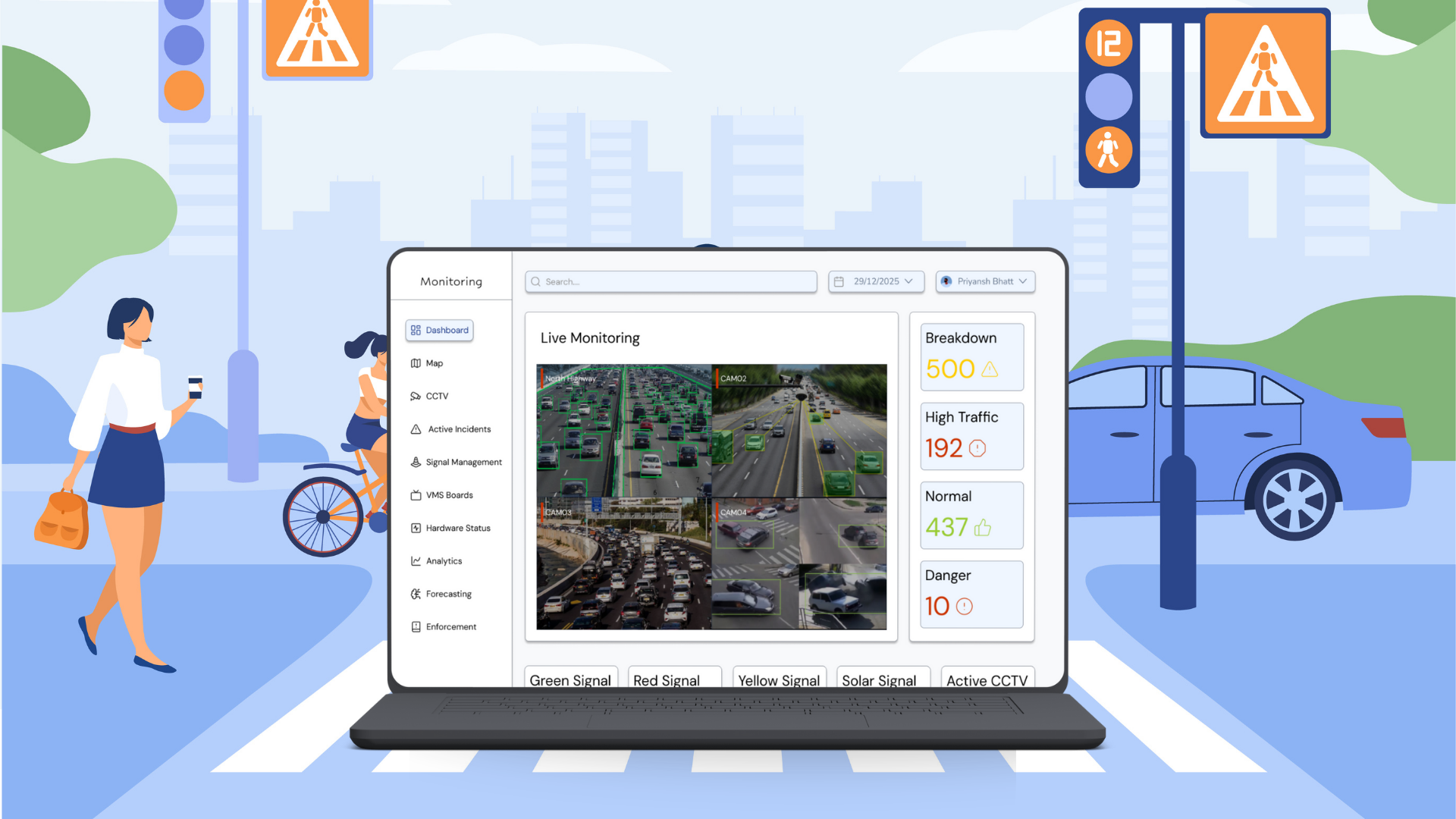
The detection pipeline adapts to different lighting and weather conditions. Standard APIs connect the system to the existing traffic infrastructure, and dashboards with predictive analytics give city planners the data they need to adjust signal timing and routing.
What we built
Real-time detection
Sub-second vehicle detection and classification from live camera feeds.
Multi-location monitoring
More than 100 traffic points monitored at the same time.
Computer vision models
Vehicle tracking models tuned for varied light and weather.
Analytics dashboard
Traffic flow, congestion and trend reports for traffic authorities.
Edge processing
Video analysed near the cameras to keep latency and bandwidth low.
Predictive analytics
Pattern analysis that helps plan routing and emergency response.
Tech stack
- Computer Vision
- TensorFlow
- Python
- OpenCV
- IoT Sensors
- React
- Node.js
- PostgreSQL
- Redis
- Docker
- Kubernetes
- AWS
- Edge Computing
- Video Processing
How the project ran
- 011 week
Research and planning
Infrastructure review, camera placement planning and system design.
- 023 weeks
Computer vision models
Training vehicle detection models and tuning them for different conditions.
- 031 month
System integration
IoT sensor integration, camera setup and backend development.
- 042 weeks
Testing and calibration
Field testing, accuracy calibration and performance tuning.
- 052 weeks
Deployment
Production deployment and city-wide rollout.
Results
The system detects and classifies vehicles with 95% accuracy and monitors more than 100 locations at the same time. The live data has helped reduce traffic congestion by 30%.
Emergency response times improved by 25% through better routing and predictive analysis of traffic patterns. The architecture can be extended to more locations as the city's needs grow.
- 95% vehicle detection accuracy
- 100+ locations monitored in real time
- 30% less traffic congestion
- 25% faster emergency response
What is a traffic monitoring system?
It is a traffic monitoring and analysis system that uses computer vision and IoT sensors to track vehicle flow, detect congestion and provide real-time traffic analytics, with 95% detection accuracy.
What did this project achieve?
The system detects and classifies vehicles with 95% accuracy, monitors more than 100 traffic locations at the same time, and helped reduce traffic congestion by 30% through better routing.
What challenges did you face during development and deployment of this project?
The main challenges were handling and storing large volumes of video data, coping with changes in weather and lighting, and classifying and counting vehicles accurately.
How did you deal with the challenges during development and deployment?
We built cloud infrastructure with auto-scaling for the data volumes, developed detection that adapts to different lighting and weather, and trained deep learning models for accurate vehicle detection and counting.
What was the development and deployment timeline of this project?
The project ran in 5 phases: research and planning, computer vision model development, system integration, testing and calibration, and deployment. It took about 3 months from planning to production.
Which technologies were used for this project?
The main technologies were TensorFlow, Python, OpenCV, IoT sensors, React, Node.js, PostgreSQL, Docker, Kubernetes and AWS.
What kind of support and maintenance do you provide after launch?
We provide post-launch support which typically includes bug fixes and updates, performance monitoring and optimization, security patches and updates, feature enhancements based on user feedback, technical support, and ongoing maintenance.
Can you provide a similar solution for our business?
Yes. We would adapt the approach to your systems, data and goals.
What positive changes did this system create for the client's business?
Real-time alerts cut congestion by 39%, saving commuters around 20 minutes a day. Accident hotspots fell by 43%, and the system analyses more than 2.8M data points every hour.
Working on a computer vision project?
Tell us about your cameras, sensors and what you need to measure. We will suggest a practical way to build it.